
How Far Back Broome County Ownership Records Go
Lawful use.
Start a Broome County Chain with the Current Grantee
Every Broome County chain begins with the newest deed. Pull the current parcel record first. From that deed, record the grantee, grantor, deed type, execution and recording dates, legal description, and the book and page or instrument number. Then treat the grantor as a grantee in an earlier search window. One verified transfer at a time, the chain grows. Working this way keeps unrelated same-name recordings out of your file. Party 1 and Party 2 labels deserve caution too. Read them alongside the document type, the town, the property description, and any cross-references before calling a deed a match.
Broome County Former Owners After 1963
From 1963 forward, the County Clerk offers deed downloads through the modern route. Search by party and date. Save the recording reference before opening the image. A result may list parties, town, page count, consideration, transfer tax, and return details, and those fields help identify the instrument, though reading the deed itself still matters. The Clerk's deed FAQ sets out the process.
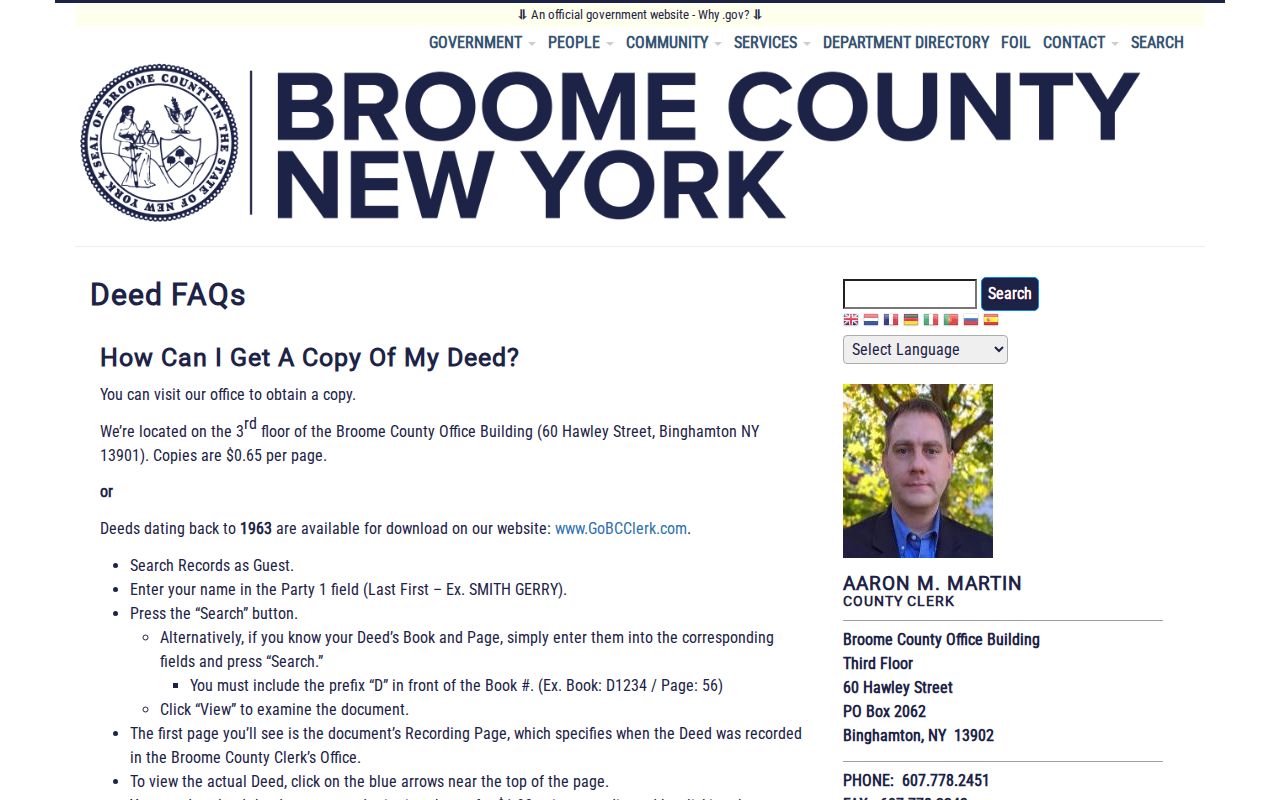
This 1963 line marks where most Broome County chains shift from scanned books to easier deed downloads.
Books 595 Through 1061 Bridge 1948 to 1962
A chain crossing the mid-twentieth century needs the scanned D books. Use the Index Books mode for 1948 through 1962. Find the name in the grantor or grantee index. Then pull the cited book and page and open that scan. Broome County's broader online land coverage does not guarantee the same searchable interface for every era. The same search tools do not reach every early deed. Label every step with its source. An index citation tells you where to look. The deed image supplies the actual conveyance terms.
Broome County Ownership Before the Online Index
The Clerk's holdings reach back to 1806. Older former owners may demand manual index books, deed volumes, filed maps, records-management help, or state and local archives. Work backward from a verified deed. Resist jumping straight to a historic surname. Legal descriptions, subdivision names, patents, roads, rivers, and adjoining owners can connect an old entry to the modern parcel. The New York State Archives and FamilySearch land-record collections offer leads, but the Broome County recording reference should anchor the chain.
Probate Can Interrupt a Simple Broome Chain
Title does not always move by sale. An estate, executor, administrator, trustee, life estate, or inheritance can transfer an interest without looking like one. Read the deed's authority language closely. Broome County Surrogate's Court resources come next. A probate file may explain who had power to convey, and the later deed records the transfer into the land chain. Directories and obituaries help sort people and dates, but they prove occupancy or relationships, not title, so treat them as corroboration.
The 1896 Fire Can Explain a Broome County Gap
The courthouse fire of December 28, 1896 destroyed many Broome County records. That does not prove a particular deed is gone. When a chain jumps near that year, search surviving volumes, filed maps, probate, newspaper notices, directories, and recitals in later deeds. State the gap plainly. Never fill it with an assumed transfer. The local newspaper inventory covers runs beginning in 1831.
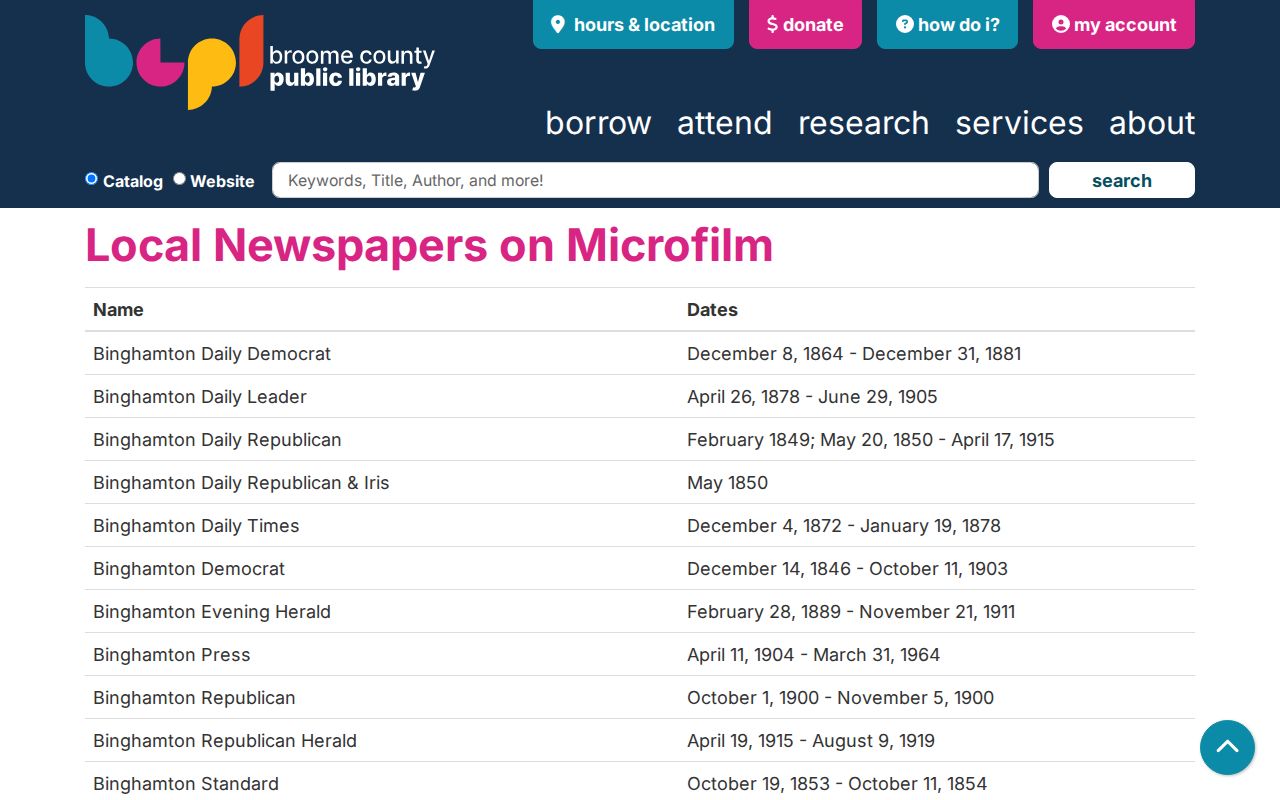
Estate notices, sheriff sales, fire coverage, and subdivision announcements can supply dates for a focused Broome County deed search.
Historic Maps Translate Former Broome Addresses
Binghamton's 1811 downtown plat can hide the same land under different descriptions. So can Johnson City's Lestershire days and later annexation. Endicott's merger and company-town growth has the same effect. Compare the current parcel with filed maps, lot and block references, and historic map resources. A modern street number fades fast. It is often the least durable link. Maps explain how descriptions relate. Only the linked deeds and their authority records establish the true former-owner sequence. Bring in a survey professional when the question turns on an exact line.