
Looking Up a Broome County Property Value
- [STEP 1 - search the address in the ]
What a Broome County Assessor Value Is Not
Value vs price.
Assessed Value Is a Broome County Tax Number
Start with what the assessed value actually is. It sits on the local roll and drives taxation within that assessing unit. That is its whole job. It is not market value, and it does not forecast a sale price. To read one fairly, pair it with the roll year and property class. Add inventory, exemptions, and municipality to the same picture. New York's level-of-assessment and equalization framework then becomes the bridge. It relates a local assessment to an estimated full value across jurisdictions. The county property search supplies the parcel and assessed fields you need.
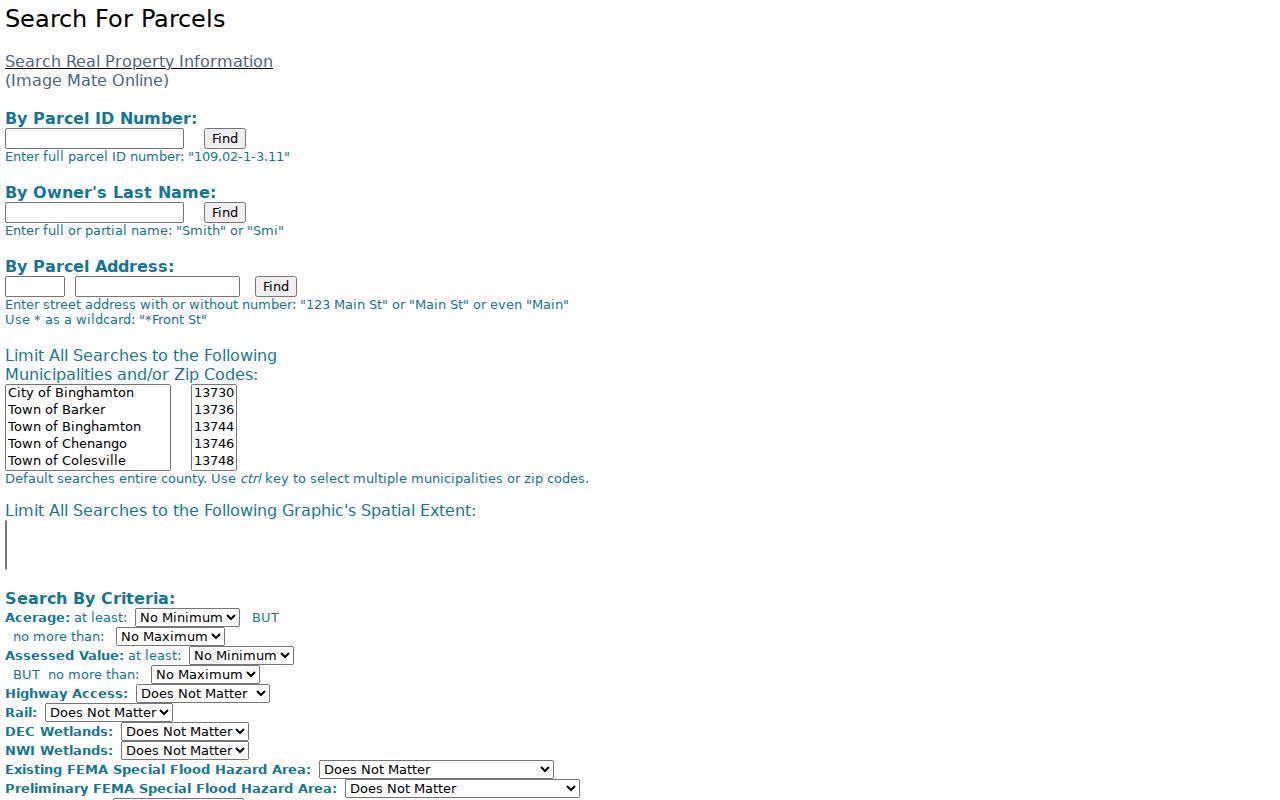
The search identifies the assessing geography that gives the number its context.
Broome County Levels of Assessment Matter
Raw assessments from Binghamton, Endicott, Johnson City, and the Town of Union cannot be lined up side by side and judged. Their assessment levels differ. Property classes, dates, and exemptions differ too. Until those are aligned, the comparison is meaningless. New York ORPTS explains how equalization rates and levels of assessment connect locally assessed values to full-value estimates, and the Municipal Data Portal covers the relevant assessing unit and year. Keep the logic straight: a higher assessment in one jurisdiction does not, by itself, mean a more valuable property than a lower assessment somewhere else.
The Broome Assessor Uses Recognized Valuation Approaches
Broome assessors work from recognized valuation approaches laid out in New York guidance. The market approach compares appropriate sales. The cost approach weighs land plus replacement cost less depreciation. The income approach examines income-producing capacity. Which method carries the most weight depends on property type and the evidence at hand. Garbage in, garbage out applies here too. Parcel inventory errors can distort any approach. Check land area, building details, class, use, and municipality before trusting a figure. Questions about the record belong with the local assessor, not the County Clerk.
Last Sale and Recorded Consideration Are Not the Same Measure
Two tools surface sale-related fields in Broome County. New York Sales Web is one. The County Clerk's recording is the other. Sales Web covers a recent window and can lag actual recordings by several weeks, while the deed result may display consideration and transfer tax. Treat neither field as a guaranteed arm's-length price. Family transfers, nominal consideration, partial interests, easements, and other nonstandard transactions all distort the comparison. Use the deed's recording reference to verify the transfer, and label the recorded amount precisely rather than loosely. A transfer-tax consistency check is not an appraisal.
Exemptions Change Broome Taxable Value
STAR, senior, veteran, and other qualifying exemptions can shrink taxable value under their own rules. They do not rewrite the deed. Nor do they necessarily change the assessor's underlying value conclusion. Read exemption entries as one field. Read assessed value as another. Then check net taxable figures as a third. The municipal roll directory leads to tentative and final records where those fields live.
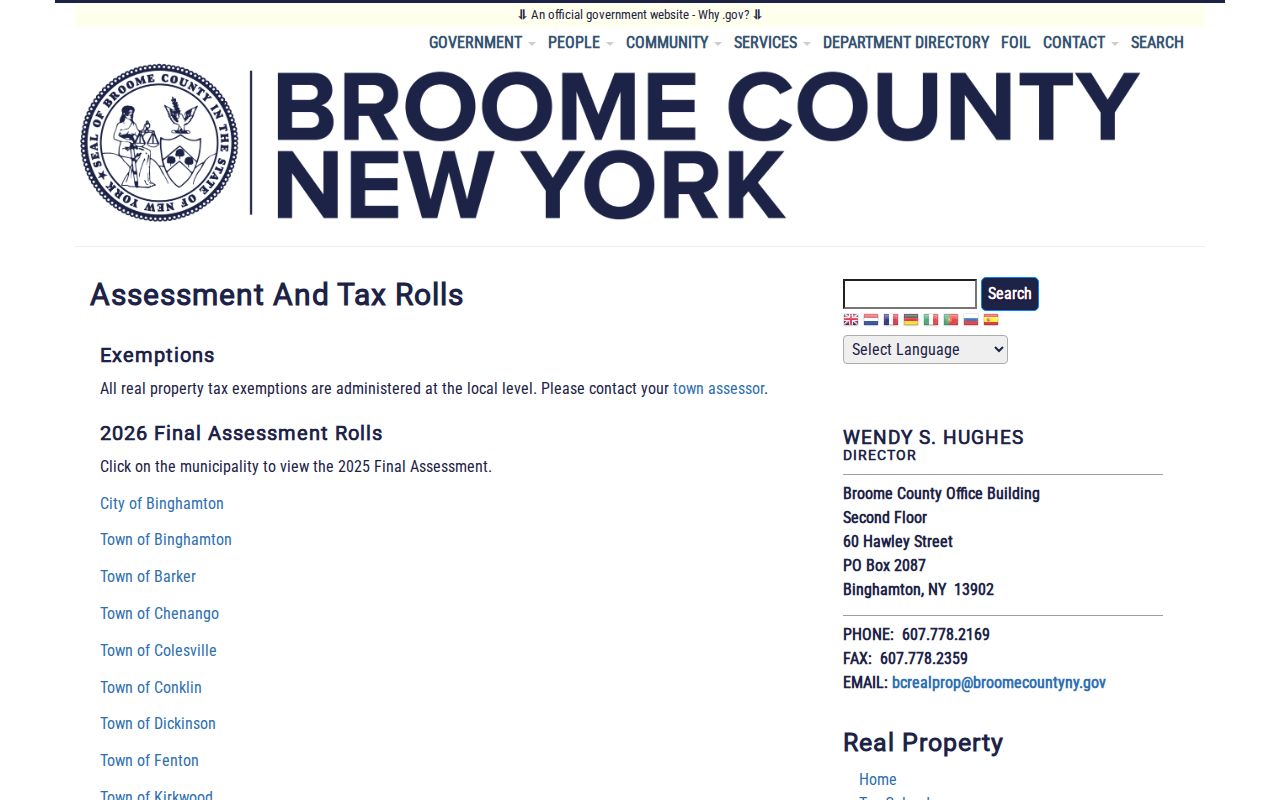
Check the local roll for exemptions affecting the taxable math.
Industrial and Historic Broome Parcels Need Context
Context matters for unusual Broome parcels. Endicott's industrial spine, the IBM and Huron Campus area, and the Innovation District place large or specialized property right beside worker housing and redevelopment land. Johnson City adds its own layers, from company-town history to the Oakdale annexation. Binghamton's downtown plat and its river and rail corridors mean a modern tax parcel may stitch together several older lots. History explains layout and use, but it is not a valuation method. Compare zoning, inventory, permitted use, site conditions, and genuinely comparable sales instead. And a former factory nearby proves nothing about contamination on the parcel you are studying.
A Broome County Property Value Is Not an Appraisal
None of these numbers is an appraisal. The assessment exists for tax administration. A recorded sale field reports one transaction detail. A market estimate applies a method as of a date. GIS acreage and boundary lines deserve similar caution, since they are reference data rather than surveyed facts. Use public values to frame questions and compare dated records, and for a sale, loan, estate, or dispute, get the professional product that decision actually requires.