
What "Who Owns This Property" Cannot Tell You
Lawful use.
The Broome County Address-to-Owner Route
The fastest path begins with Broome County Real Property Search. Enter the situs address and copy down the owner of record. Note the mailing address if it differs, the full parcel number, the municipality, and the roll year. Drop the parcel into Parcel Mapper next to confirm the polygon sits where you expect. From there, run the displayed owner as a grantee in SearchIQS. Line up the newest deed against the parcel: match the property description, the town, the recording date, and the liber and page reference. What you end up with is proof, not just a name. The assessment roll tells you who the county bills. The deed records tell you how that ownership got there.
The county search form accepts address, owner, parcel, municipality, and ZIP.
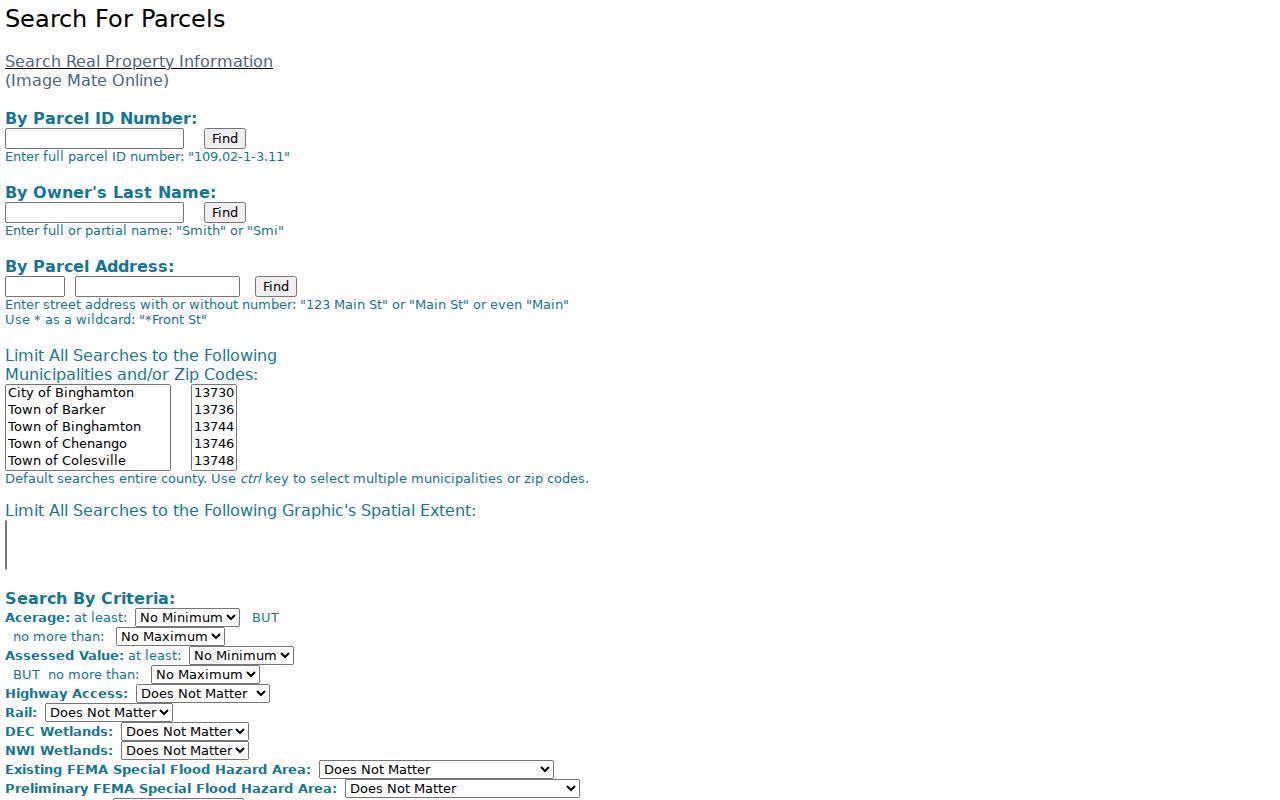
Those fields supply the identifiers a deed check depends on.
Owner of Record Does Not Mean Occupant
The owner of record on the assessment roll serves tax administration, not occupancy. The mailing address can differ from the property address. Neither field tells you who lives there. A trust, LLC, estate, life tenant, or several grantees may hold the parcel instead of one familiar personal name. Copy the public field exactly as printed. A mailing address is never evidence of residence. New York's Address Confidentiality Program and similar privacy protections can also shape what address details appear in public property records.
The Latest Broome County Deed Confirms the Transfer
SearchIQS allows lookup by party, date, document type, town, book and page, or instrument number. Enter the roll owner as the grantee lead. Open the newest plausible deed and match its legal description to the parcel. The Clerk offers downloadable deed records from 1963. Scanned books cover 1948 through 1962. Older chains require index books or help from the office and archives. The Clerk's deed instructions lay out that coverage in detail.
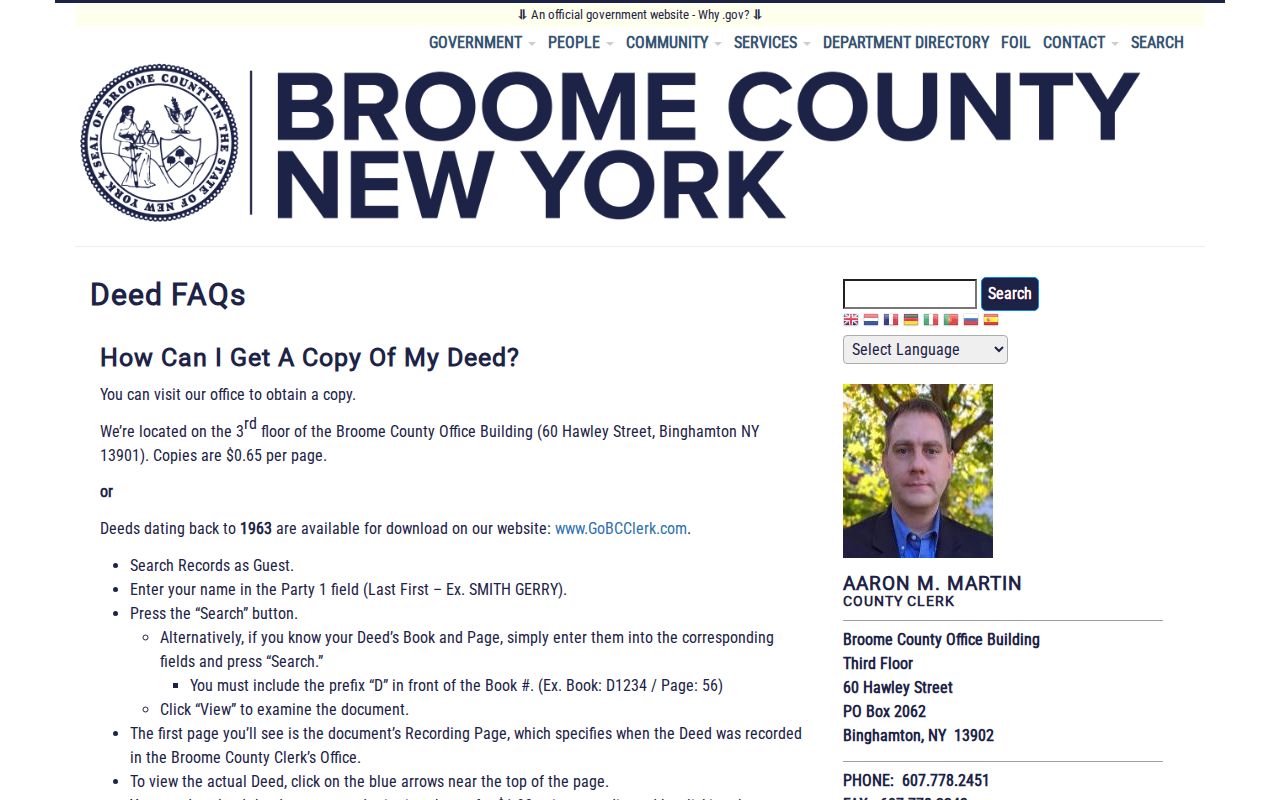
Those instructions mark the turn. A current owner check moves from web search to books or a Clerk request at that line.
Recent Sales Can Outrun the Broome County Roll
March 1 fixes taxable status. Tentative and final rolls follow later in the year. A deed recorded after that date can show a new grantee. The assessment owner field still lags. Compare the deed's recording timestamp, the roll year, and the date on the parcel result. The county publishes no fixed promise about how fast a recent sale reaches the roll. A stale owner field signals timing, not error or concealment. Recording and assessment cycles simply differ. The newest recorded deed is the stronger transfer evidence. The assessor can explain how the tax roll gets updated.
Entities and Estates Need a Second Broome Search
A company grantee deserves a second pass. Keep the exact legal name and check the New York Department of State business database for entity status and filings. That database names the organization. It cannot prove an officer personally owns the real estate. When an estate, executor, administrator, or trustee appears, look to Surrogate's Court and the authority the deed cites. Transcribe multiple grantees and life-estate language rather than simplifying them. The form of ownership in the public document can matter. A title professional should interpret the legal consequences.
The Map Prevents a Broome County Name Mismatch
Owners with the same name hold many parcels. A single street can cross a jurisdictional line. Parcel Mapper settles the question by confirming that the polygon, road, and municipality match the property described in the deed. A Binghamton mailing address may sit outside the City of Binghamton, and Johnson City or Endicott must be separated from the wider Town of Union. The map cuts down false matches. It still cannot certify a boundary, since shared-line questions call for deeds, filed plats, and a survey.
What a Broome County Owner Search Cannot Prove
A public owner search has limits. It cannot guarantee clear title. It cannot reveal every unrecorded interest, establish occupancy, settle a boundary, or state market value. Mortgages, liens, judgments, easements, probate, and later recordings can all change the legal picture. Use the deed records and parcel data for property diligence and civic transparency. Never use them to watch or target a person. For a transaction or dispute, save the parcel result, the newest deed, chain references, the map, tax information, and any gaps. Then bring in title, legal, appraisal, or survey help.