
Getting a Copy of a Broome County Deed
Recorded, not guaranteed.
Broome County Deed Records Use Several Search Eras
The County Clerk traces its holdings to 1806, when Broome County was formed. Digital access, however, splits by era. Deeds from 1963 forward can be downloaded. Deed Books 595 through 1061, covering 1948 to 1962, are scanned and reachable through the index-book route. A separate county statement mentions online land records from 1935 more broadly. Treat these as distinct paths rather than one seamless database, and keep the exact index, volume, page, and access method with every citation.
An empty modern result is not the end. Work the grantor-grantee index, widen the date range and town, and take the citation to the Clerk's counter if the image stays missing. Records staff can also check earlier volumes.
The official deed guidance documents the breakpoints.
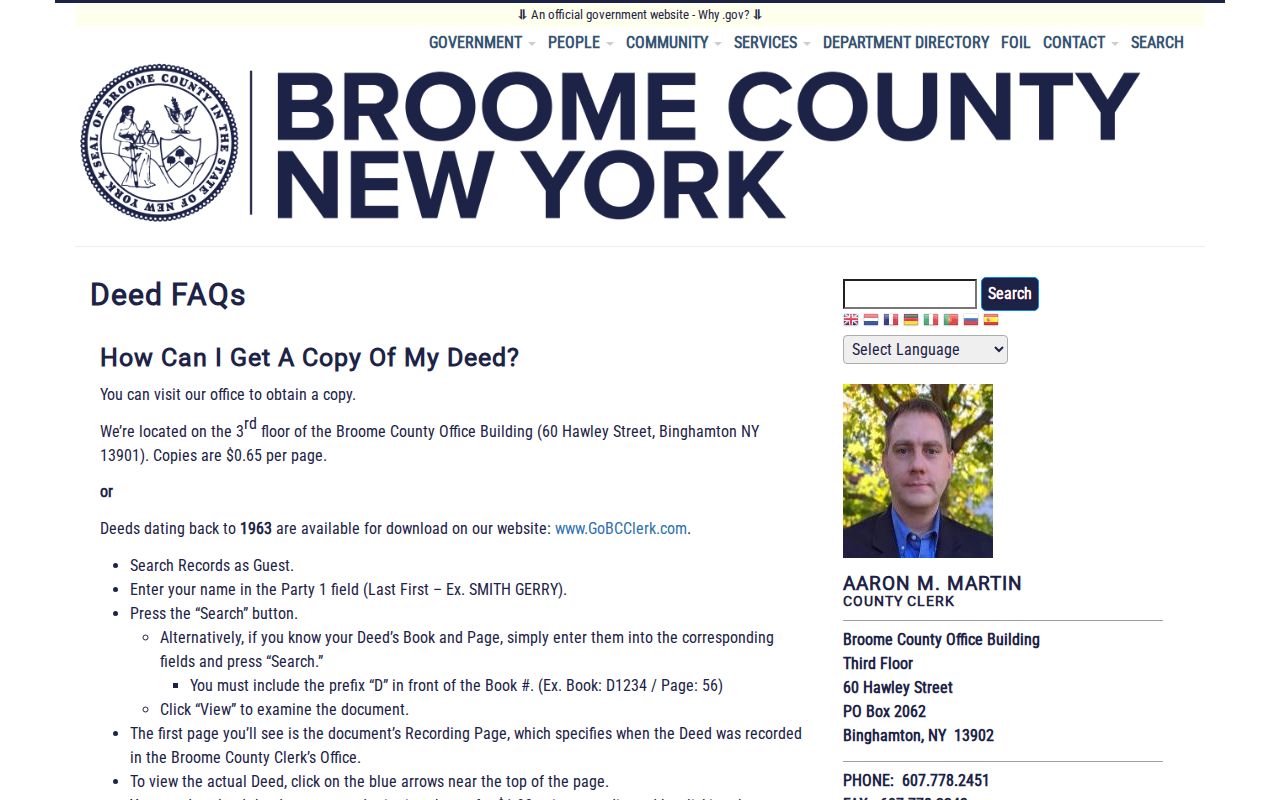
The instructions separate modern downloads from the scanned-book workflow used for mid-century deeds.
The Broome County Recording Page Supplies Chain Clues
A SearchIQS result can display deed book and page, instrument number, recording date, party names, town, page count, consideration, transfer tax, and return details. The book/page or instrument reference makes the durable citation. Party names start the chain. The town narrows same-name matches, and the legal description tests whether the instrument touches the intended parcel.
Consideration and transfer tax are consistency checks, never automatic market value. Family transfers, nominal sums, partial interests, exemptions, and nonstandard transactions can all push the figure far from an arm's-length price. Record the field as written. Label any inference as your own.
Walking Broome County Deed Records Backward
Start with the newest deed you have verified. Write down its grantee, grantor, dates, deed type, legal description, and recording reference. Then search that grantor as a grantee in an earlier period. Find the acquiring deed. Repeat. The backward walk is slower than collecting every same-name hit, but it ties each step to the same land.
Estates complicate the picture. When a transfer runs through an executor, trustee, life estate, or several grantees, open the related probate or authority record. Broome County Surrogate's Court material may explain a fiduciary deed. A directory can identify a resident, yet residence never substitutes for a deed.
Broome County Mortgages and Liens Need Their Own Review
A deed says who conveyed the stated interest. It cannot show whether every mortgage, judgment, lien, easement, assignment, or lis pendens was later released. That question takes a separate look. Search each owner across the whole ownership period. Follow each mortgage to its satisfaction or a later assignment. Compare property descriptions before pinning a same-name filing on the subject parcel.
SearchIQS also carries the county's Fraud Alert entry. Monitoring can flag a new document tied to a watched name. It does not prove fraud, and it cannot replace reading the instrument itself. The SearchIQS county page is the public gateway.
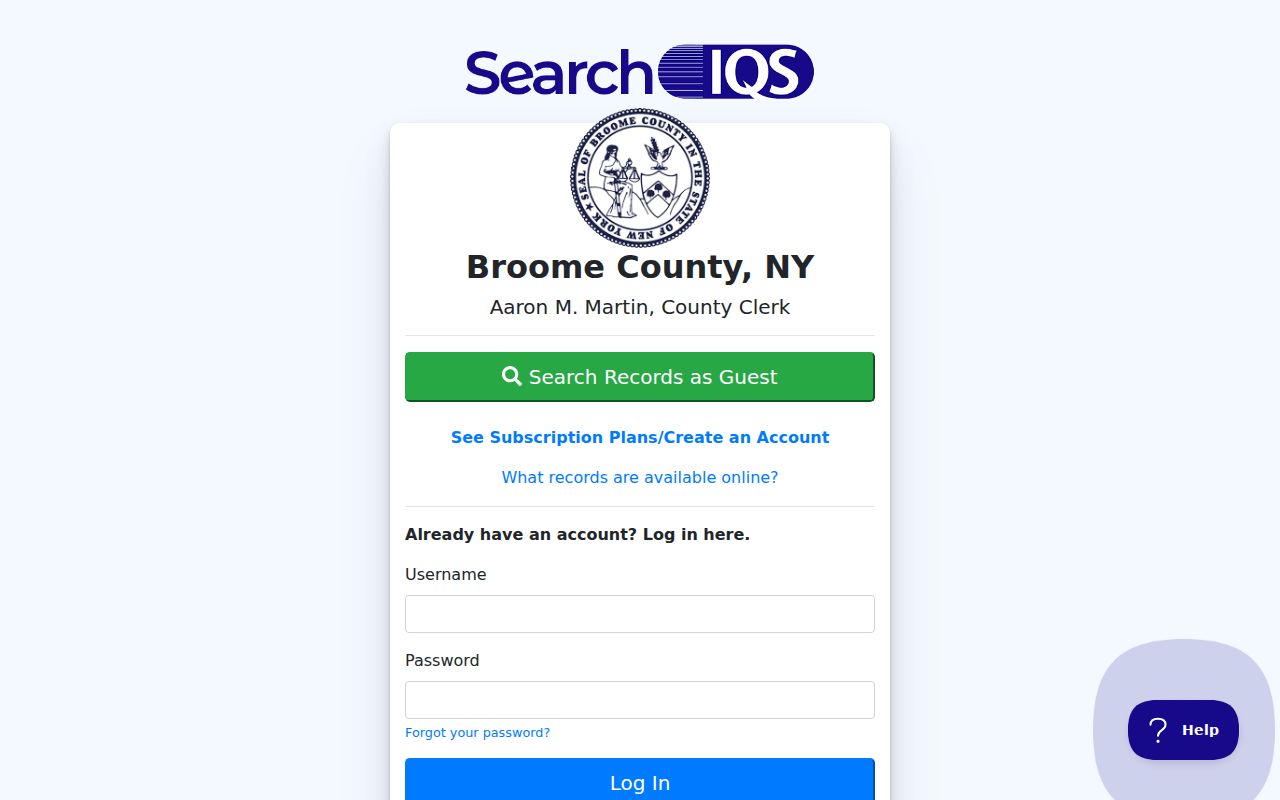
The county entry links record searching with optional notice of later name activity.
Older Broome County Deeds May Depend on Maps
A legal description outlives a street address. Preserve the subdivision, lot, block, map, patent, river, road, adjoining-owner, and prior-deed references anyway. The Clerk's filed-map index helps. So does the county GIS map library. Downtown Binghamton's 1811 plat shows why care pays off: a present building may occupy pieces of several original lots.
A map explains geography, not title. Keep the recorded chain going, and use a licensed survey when the exact line or acreage matters.
The 1896 Courthouse Fire Is a Broome County Research Warning
The County Clerk history reports a courthouse fire on December 28, 1896. The blaze destroyed many records and damaged the law library. That does not mean a specific parcel deed is gone. It does justify a targeted search. Look closer when an abstract jumps near the date. A later instrument may cite a lost volume. A description may use an earlier name without a clear reference.
Search the surviving books, filed maps, probate, newspapers, directories, and Local History Center material. Broome County Public Library newspaper microfilm begins in 1831. Estate notices may surface there. So may sheriff sales and subdivision announcements. Fires and street changes may appear near a recorded event.
The library inventory helps you pick a title and date range.
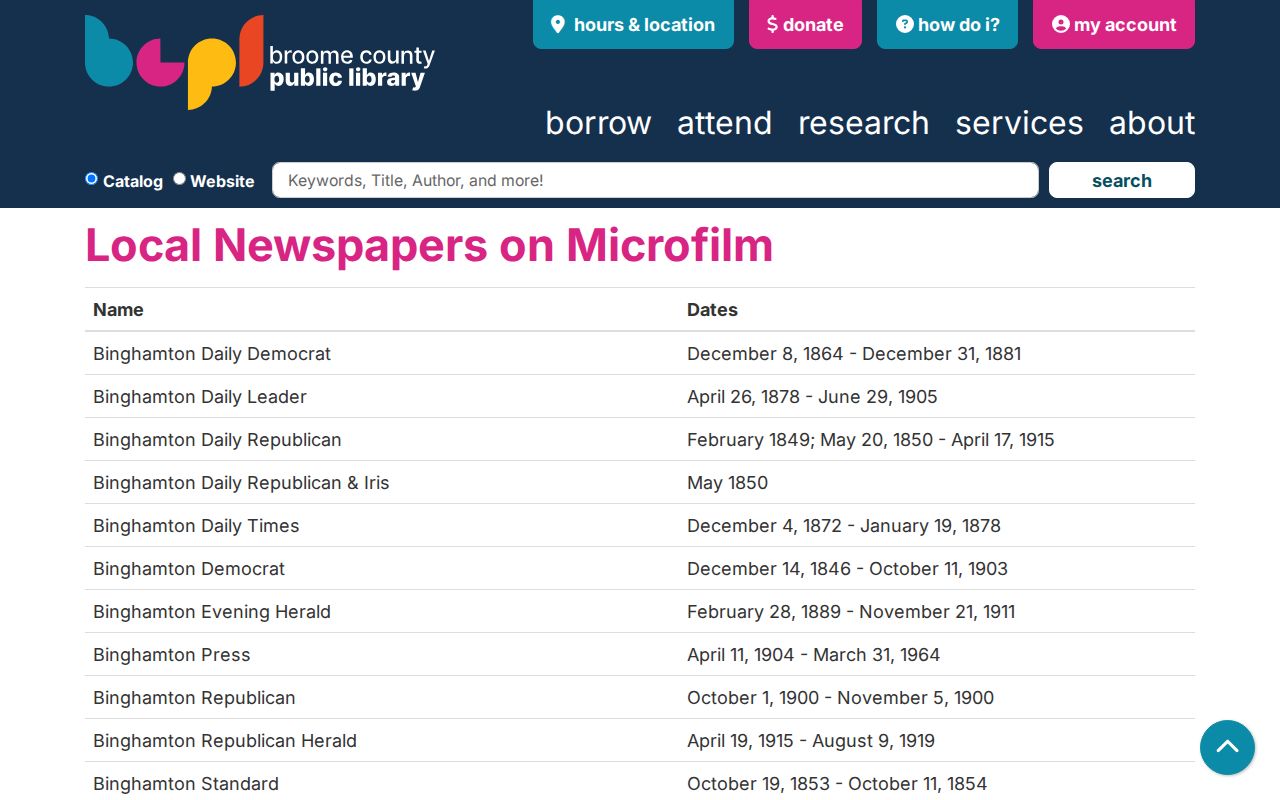
Newspaper dates support a deed-chain gap, not assumed ownership.