
Looking Up a Broome County Tax Bill
- [STEP 1 - search the by address or parcel]
Appealing a Broome County Assessment
Appeal window. [1-2 sentences - Broome County assessment appeals must be filed by with the ; missing the window means waiting for the next cycle.]
The March 1 Broome County Tax Snapshot
March 1 sets taxable status across the county. Everything hinges on who owned each parcel that day. Tentative rolls follow, grievances cluster in May, and final rolls arrive in July before school and municipal tax cycles begin. Label every Broome County property tax record with its year and stage. A deed recorded after the snapshot can name a new grantee while the assessment owner field lags behind. The official calendar lays out the full sequence.
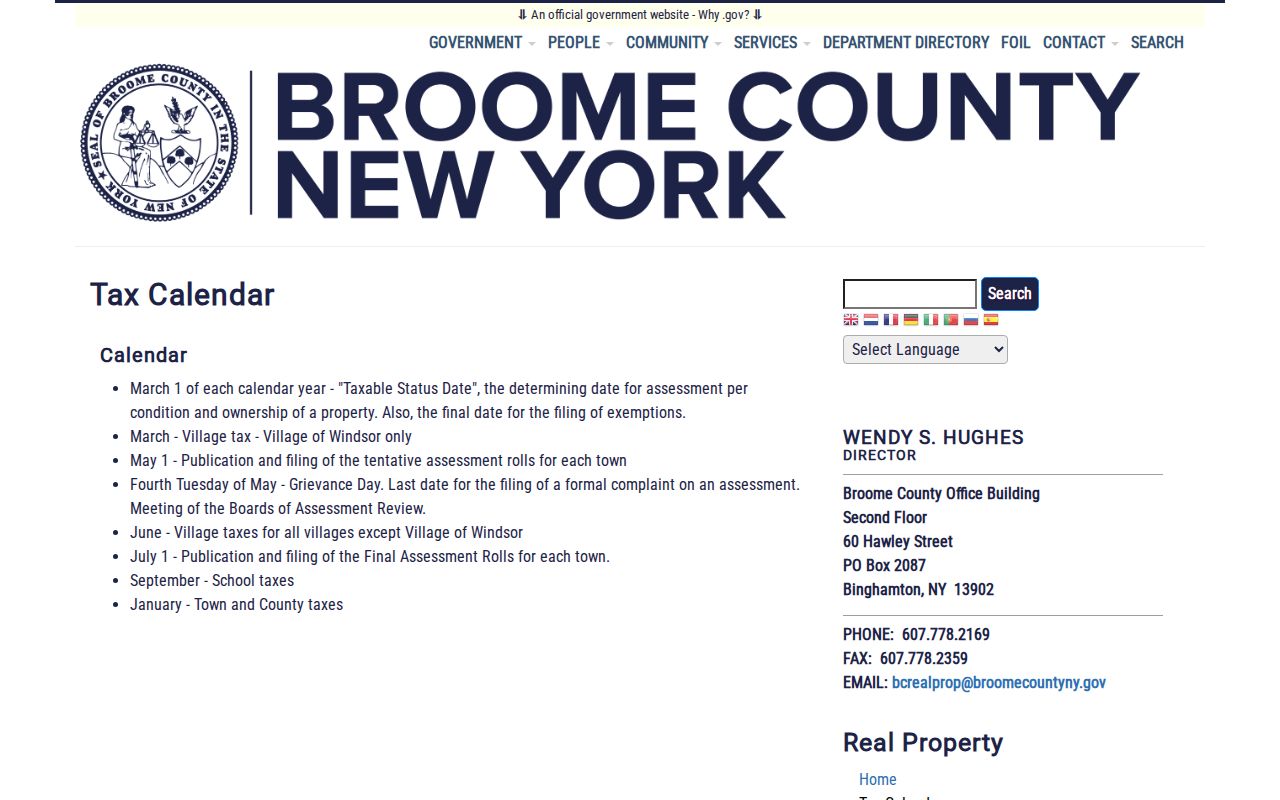
Those dates explain the puzzle. A current bill, a final roll, and the latest deed each reflect a different moment in time.
Broome County Property Tax Records Are Local
No single countywide assessor covers every parcel here. City, town, and village assessors run the assessment and exemption work, while County Real Property Tax Services handles mapping and posts the tentative and final rolls. Pick the municipality attached to the parcel, not the postal city on the envelope. The Town of Union area shows why. Johnson City and Endicott keep village record geographies, so a broad Union search will not return village-only results. The assessment-roll directory lists each municipal path.
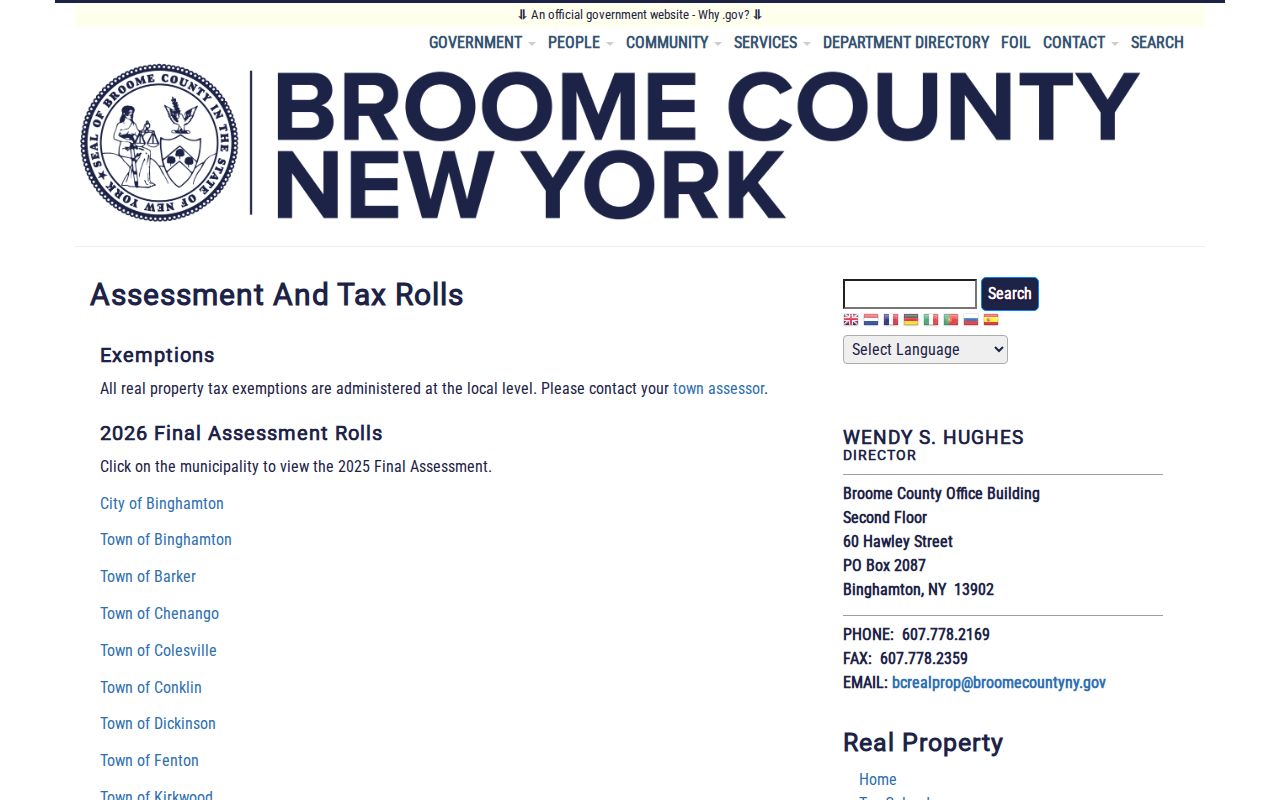
The official directory points a property tax search to the correct tentative or final roll.
TaxLookUp Finds Broome Bills and Receipts
TaxLookUp opens with county selection, then routes you toward municipal or school tax material. Search by parcel ID, owner, street, or tax year, depending on what the destination supports. Record the collector and bill identifier as you go. Note the levy year, amount, payment date, and displayed status too. Historical coverage varies by locality. When an older bill is missing online, ask the collector directly. A receipt settles the payment question for that one bill. It is not a deed or a title report. It is also not proof that all taxes and liens are resolved. The TaxLookUp entry starts with Broome County selection.
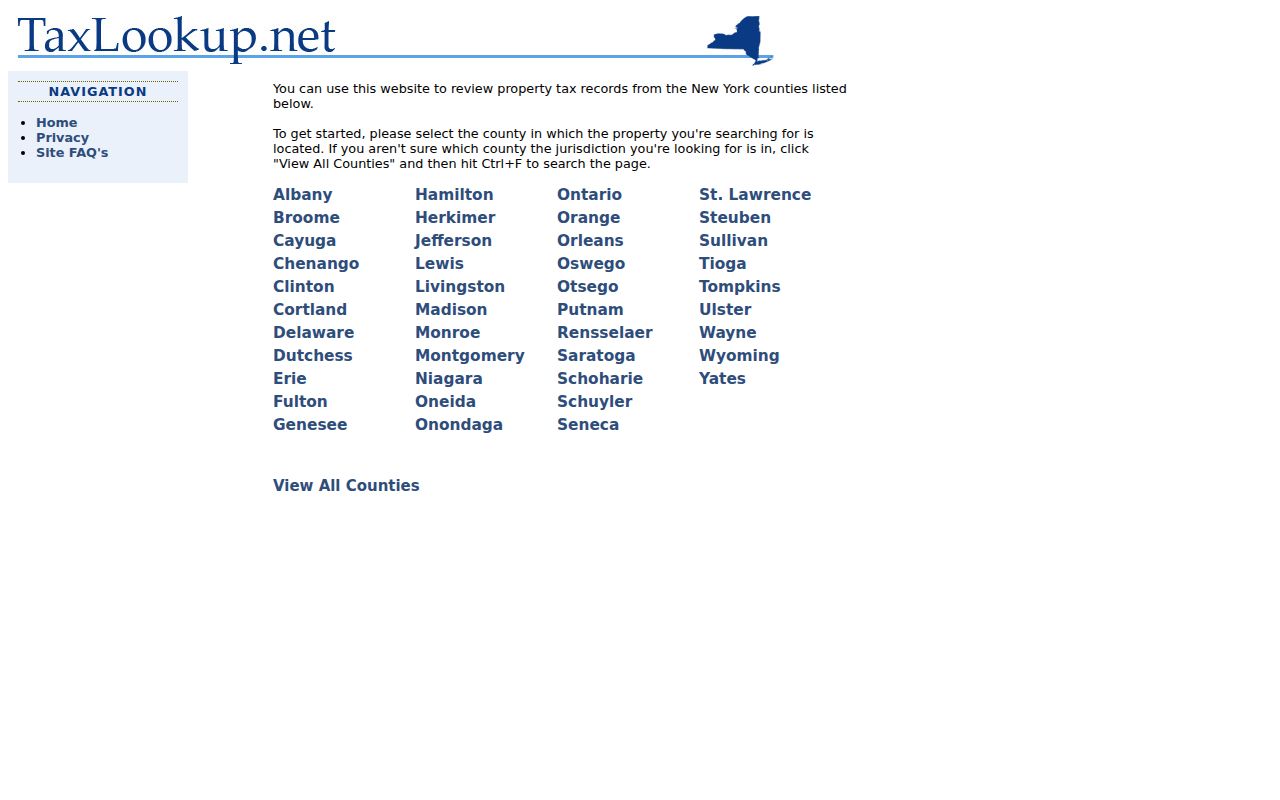
The screen shows the first step before a user picks the relevant local collection source.
Assessment, Exemption, and Taxable Value Are Different
Assessed value is simply the figure entered on the roll. Exemptions shrink the amount subject to a levy without touching the deed. Sometimes they leave the underlying assessment unchanged, too. New York's level-of-assessment and equalization framework matters whenever you relate an assessment to estimated full value. It also matters when you compare parcels across assessing units. Read the property class, land and improvement fields, exemption codes, net taxable figures, roll year, and assessing unit as one picture. A higher assessed value in one municipality does not automatically signal higher market value. That comparison fails against a parcel in another town.
Broome County Tax Certificates Answer a Focused Question
The county publishes a tax-certificate request with a $20 charge. Fields cover the owner, property, and tax-map number. That route suits a focused county, town, or village tax-status question. Confirm the current form, fee, and scope before ordering. A certificate does not replace school-tax research, the deed chain, or a full title examination. For corrections, the tax-roll change form updates owner names and mailing information. The county warns that removing a name from ownership requires a new deed. No administrative roll correction can perform a conveyance.
Broome County Assessment Grievances Use RP-524
Check the parcel inventory before filing anything. Review the property class, exemptions, municipality, assessment, and level of assessment too. New York's RP-524 process handles the formal complaint. The county calendar places grievance activity around the fourth Tuesday in May. Confirm filing rules and deadlines with the local assessor and review board. Strong evidence targets factual error or value as of the required date. Comparable sales should match property type, location, condition, and transaction quality. A high tax bill alone does not prove the underlying assessment is wrong.
Delinquent Broome Taxes and Foreclosure Records
County Real Property Tax Services posts foreclosure information, court-related orders, auction material, and surplus-claim guidance. Delinquency does not mean ownership already changed. Track the tax status, foreclosure case, judgment, sale, and later recorded deed as separate stages. The county foreclosure page organizes those materials.
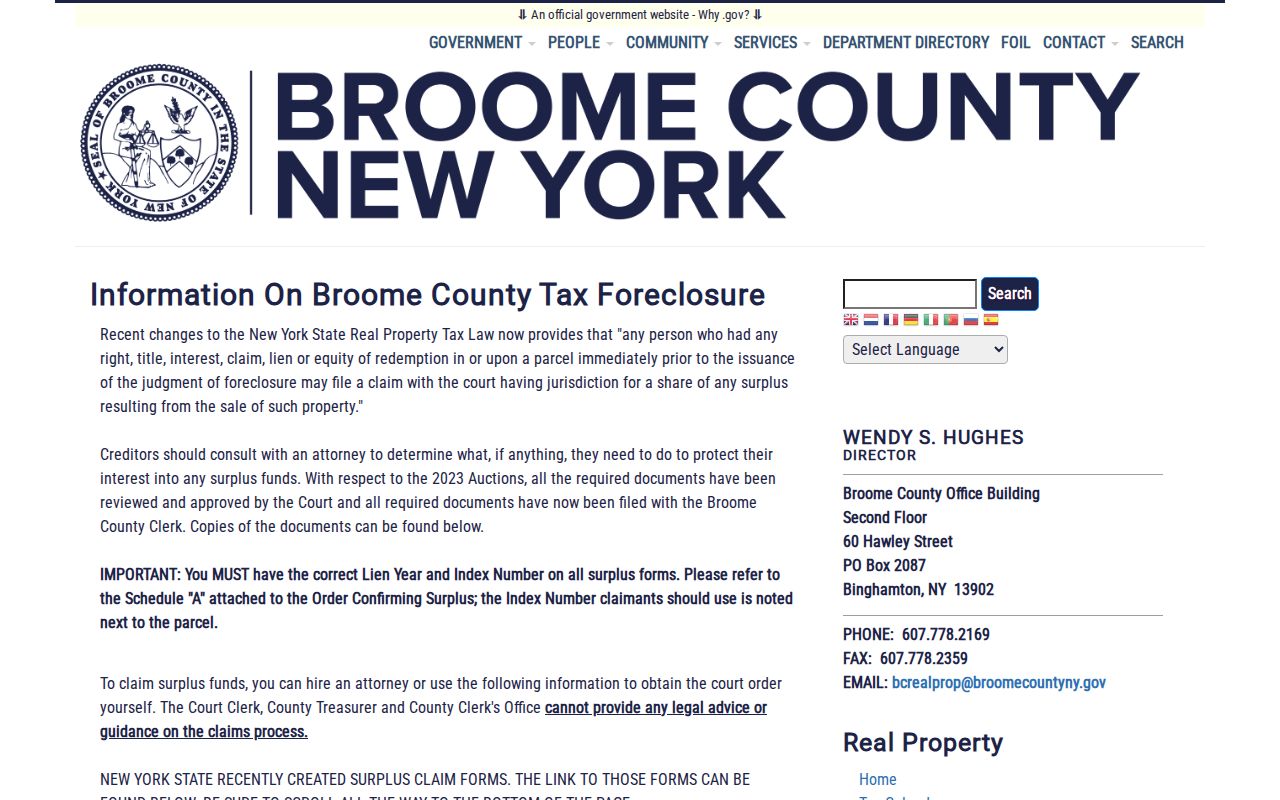
The official page separates active tax enforcement documents from ordinary bill and receipt searches.